
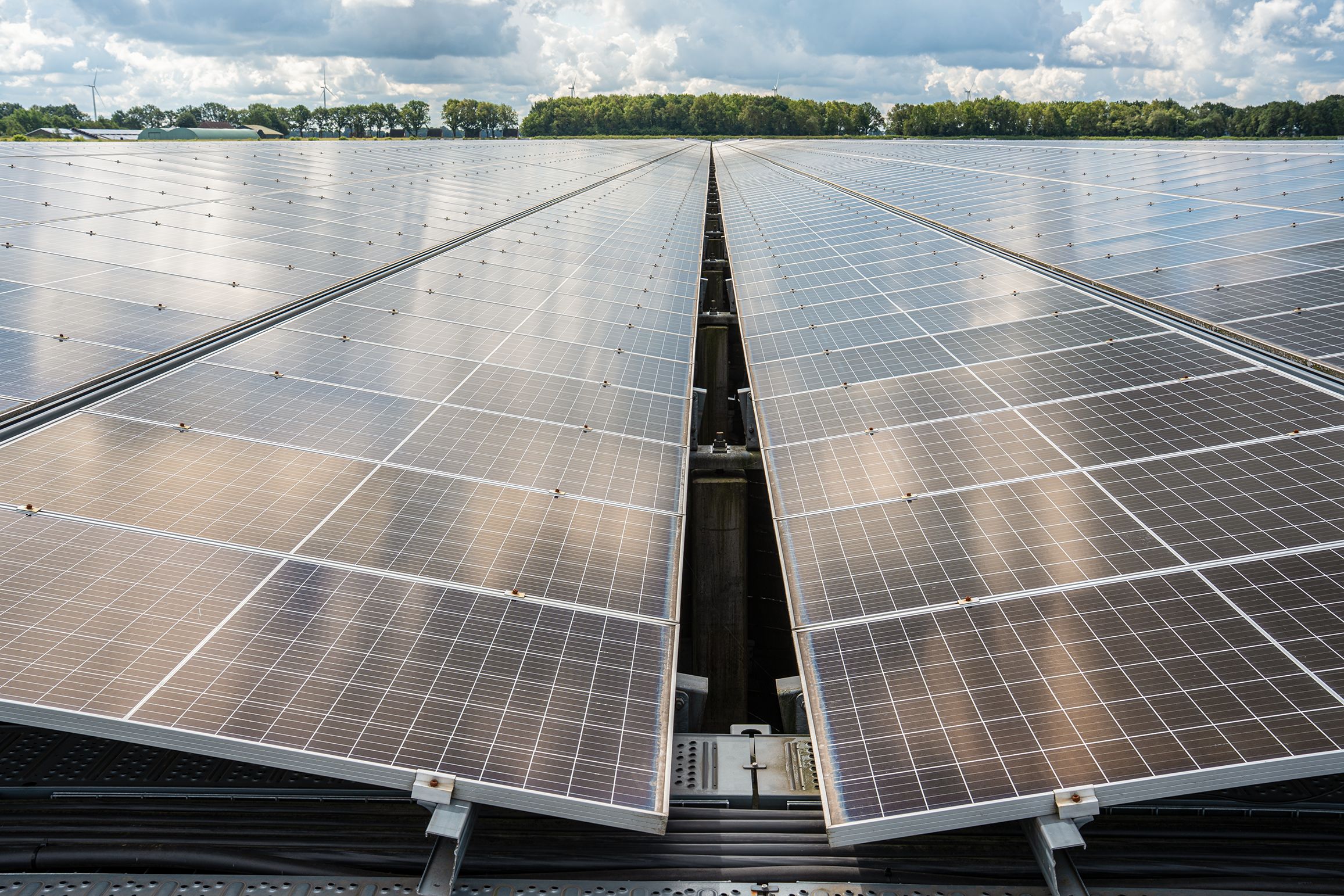
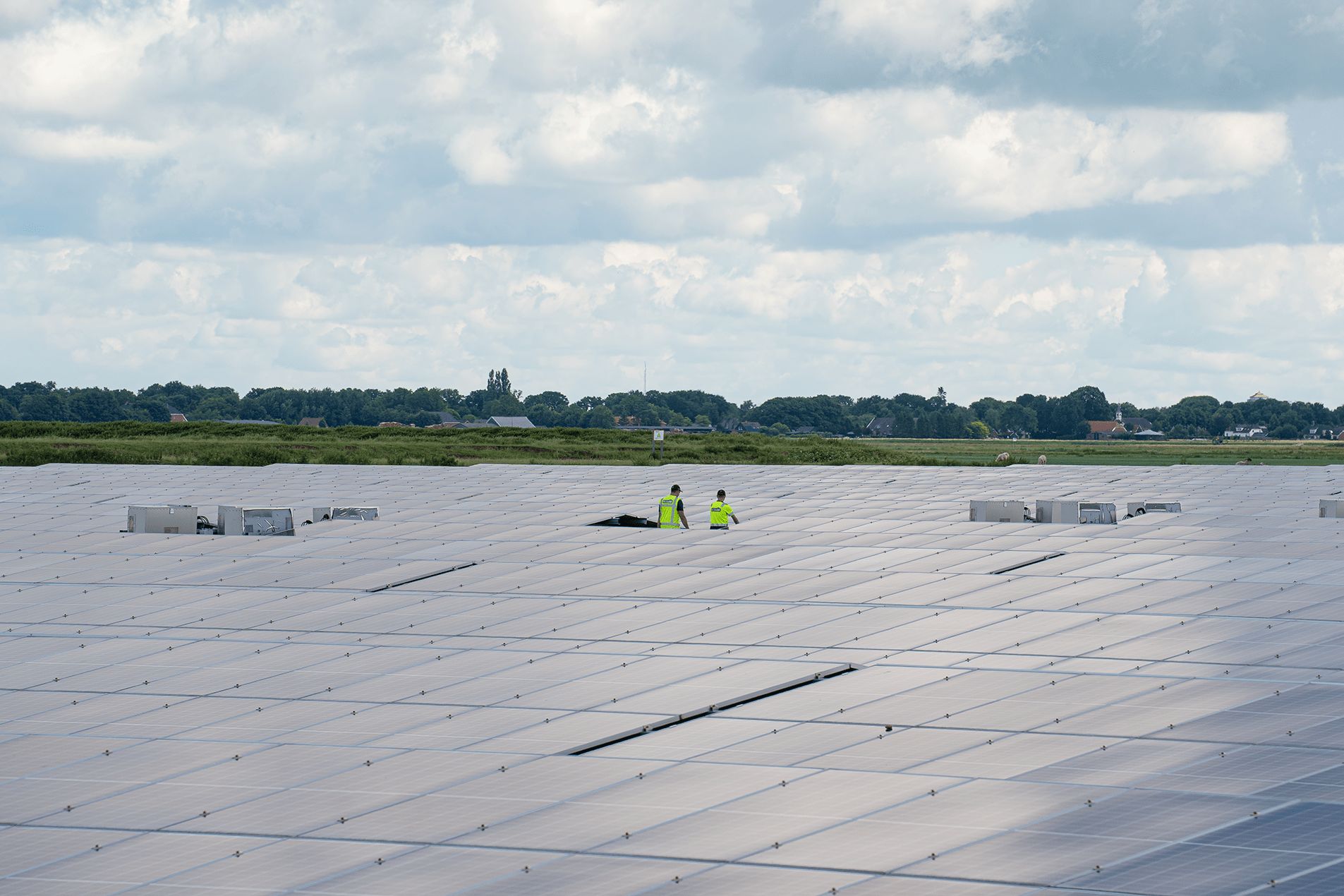
At first glance, Solar Park Vloeivelden seems quiet. Rows of solar panels, open skies, a park generating energy. The systems are monitored remotely. Nothing seems urgent. Nothing seems out of place.
For Mark, Operational Site Manager at Klaer, that sense of calm is exactly what good Operations & Maintenance, or O&M, is there to protect. Good O&M does not start only when something breaks. It starts much earlier. With monitoring, inspections, clear communication and people on site who know what to look out for. The goal is not to wait until a problem becomes visible before taking action. The goal is to spot signs early, resolve them properly and make sure the solar park continues to perform as it should.
Small details, big impact.
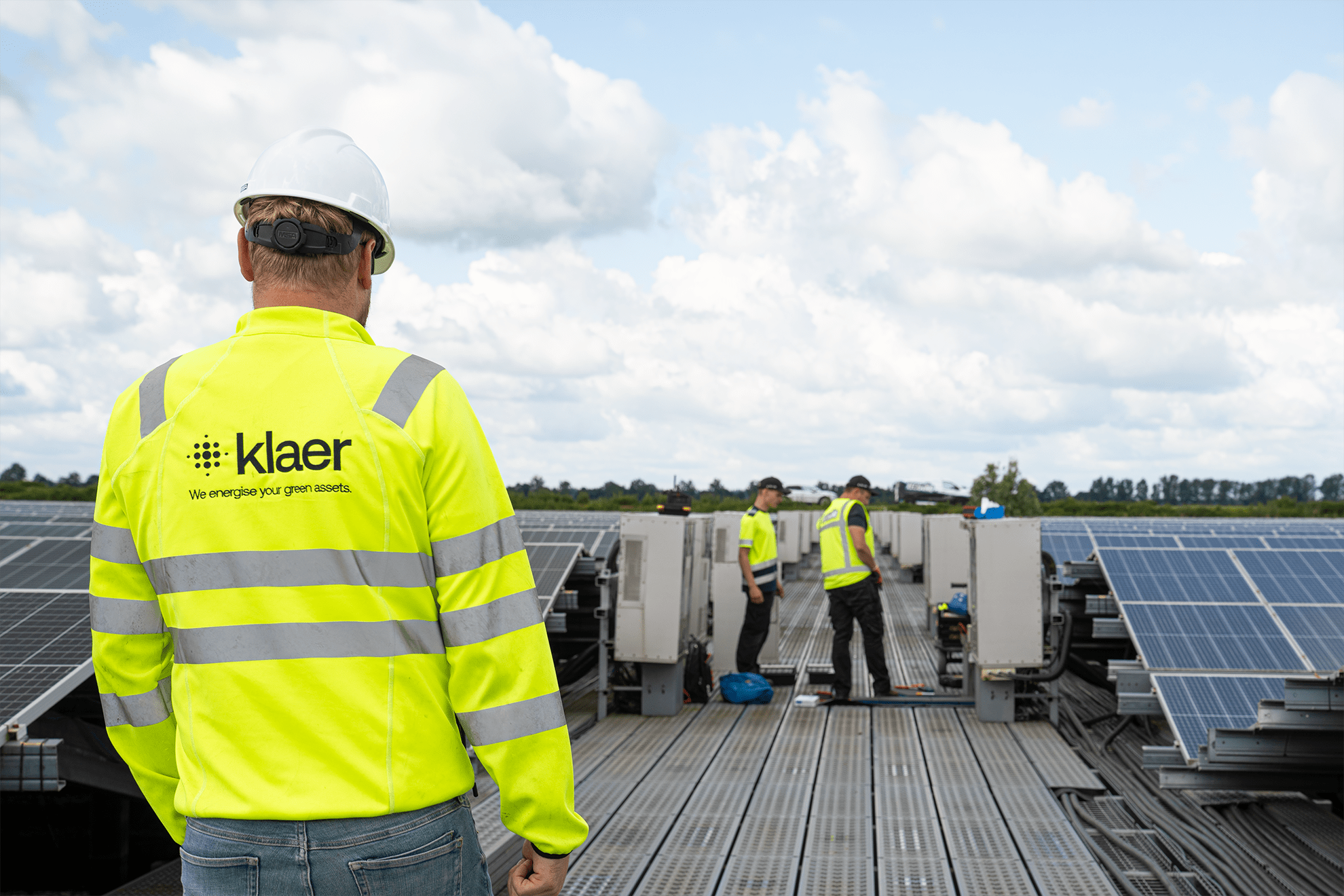
When Mark drives onto a solar park, the inspection has effectively already begun. He looks at the overall condition of the site. Are the rows still straight? Are cables hanging beneath the panels? Are connectors getting too close to the ground? Are transformer stations clean and dry? Are labels and stickers still clearly legible? Is there any visible damage caused by rodents? Has the vegetation grown too high?
Some checks may sound minor. In practice, they can make a big difference.
A cable hanging too low may not seem like a major issue. But on a solar park where sheep graze between the panels, it can pose risks to the animals, especially lambs. If a connector touches damp ground, it can cause a short circuit. And if a single connector causes a fault, an entire inverter can go offline.
Sometimes the solution is simple. The production loss is not. That is why these kinds of checks are a standard part of good asset management. Not to look for problems for the sake of it, but to prevent small deviations from turning into costly failures.
Data only works if the basics are right
Klaer monitors energy systems remotely. Data helps the team understand how a solar park is performing and where action is needed. But reliable data starts with the right conditions on site.
That is why Klaer also checks the measuring equipment at the park, such as pyranometers. These sensors measure how much sunlight reaches the site. This information helps compare actual production with expected output.
If dirt, dust or a spiderweb covers the sensor, the data becomes less reliable. And if the data is inaccurate, it becomes harder to assess whether the park is performing as expected. Even advanced monitoring starts with something very practical: keep the equipment clean, keep the site in good order and keep checking whether what the dashboard shows matches what is actually happening outside.
Working together on site
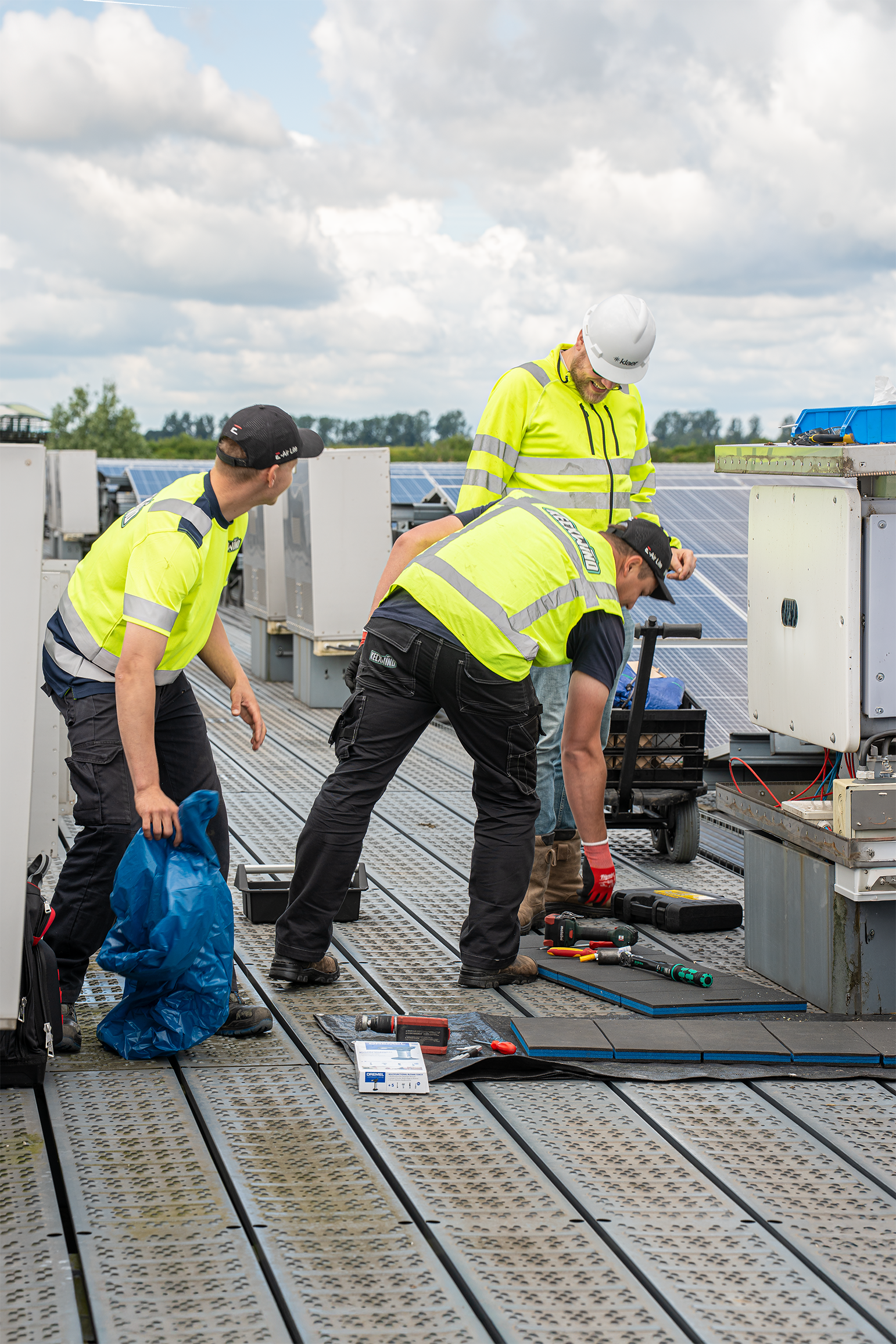
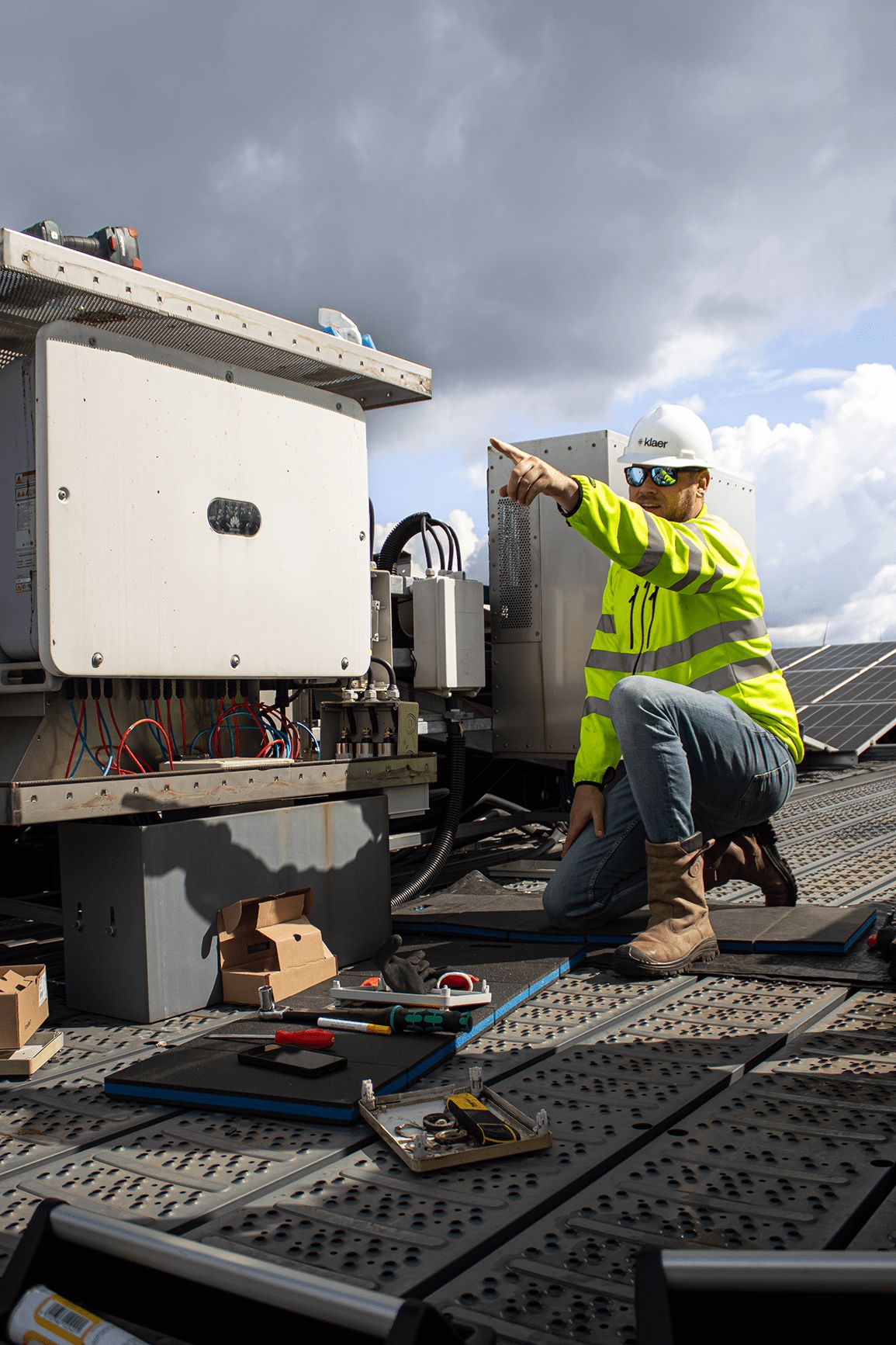
During the inspection at Vloeivelden, Kecxwind’s technicians are already working on site. They are replacing an inverter, a component that may require attention during the lifetime of a solar park.
Kecxwind carries out technical work in the field. Klaer coordinates, monitors and maintains the operational overview. On site, those roles come together.
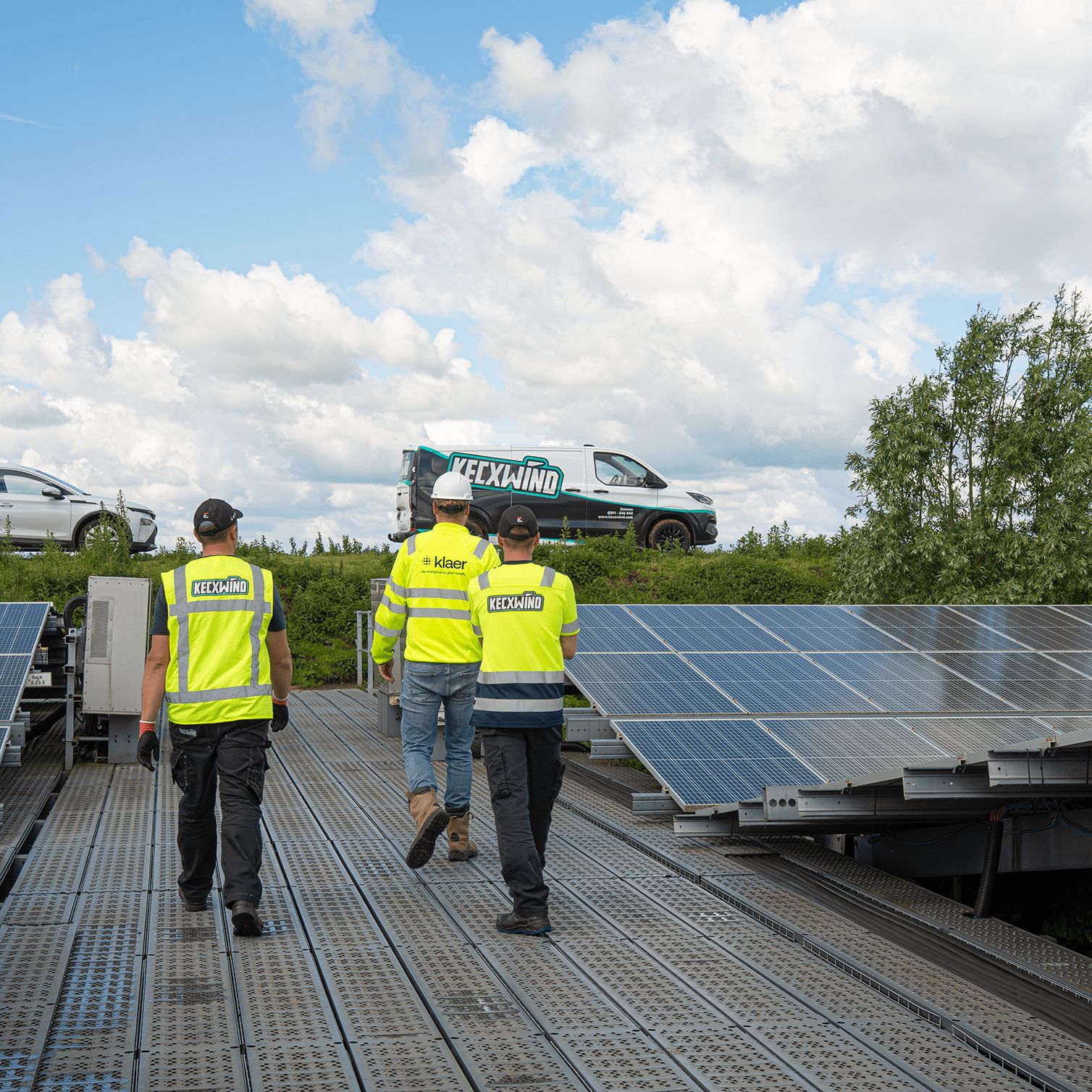
Mark stops by to check in. How is the work going? Have they come across anything unexpected? Is everything on schedule? Is there anything else Klaer needs to pick up? The conversation is informal, but important.
Good O&M is not just about installations. It is also about collaboration. Klaer works with various partners on and around the solar park, from technical maintenance to vegetation management. Klaer keeps the overview, monitors the quality of the work and makes sure the right people take action at the right time.
On site, Klaer is the eyes and ears of the solar park.
Fast, clear and practical
Not every problem can be prevented. Components fail. Inverters need to be replaced. Thunderstorms can cause faults. Equipment wears over time. When something goes wrong, speed matters.
A solar park that is not producing loses value. For owners and investors, downtime has a direct impact on the park’s performance. The sooner a problem is identified, investigated and resolved, the better the solar park’s performance is protected.
That does not mean the fastest solution is always the best one.
If a quick repair leads to the same problem again later, a more durable solution may be better, even if it costs more upfront. Good O&M is not about doing the bare minimum. It is about protecting performance over the long term.
That requires technical knowledge, practical insight and clear communication. If something cannot be resolved immediately, the client needs to know what is happening. If action has already been taken, the client needs to know that too. Communication is part of the work, not something that comes afterwards.
Nothing wrong does not mean nothing done
The strongest O&M stories are not always the most spectacular ones. At Vloeivelden, there is no major fault. No crisis. No visible problem bringing the solar park to a standstill. There are technicians replacing an inverter, a site manager inspecting the park, equipment being checked and conversations taking place on site. That is exactly why this visit shows so clearly what good O&M is all about.
Stable performance does not happen by itself. Klaer monitors, checks, coordinates and follows up. Every inspection, every conversation and every practical solution helps keep the solar park safe, reliable and productive.
For the client, good O&M often looks like fewer phone calls, fewer surprises and a solar park that keeps doing what it is supposed to do. Behind that sense of calm is a team paying attention before something becomes a problem.
Good O&M goes unnoticed. Not because the work is invisible, but because green assets are in good hands.


